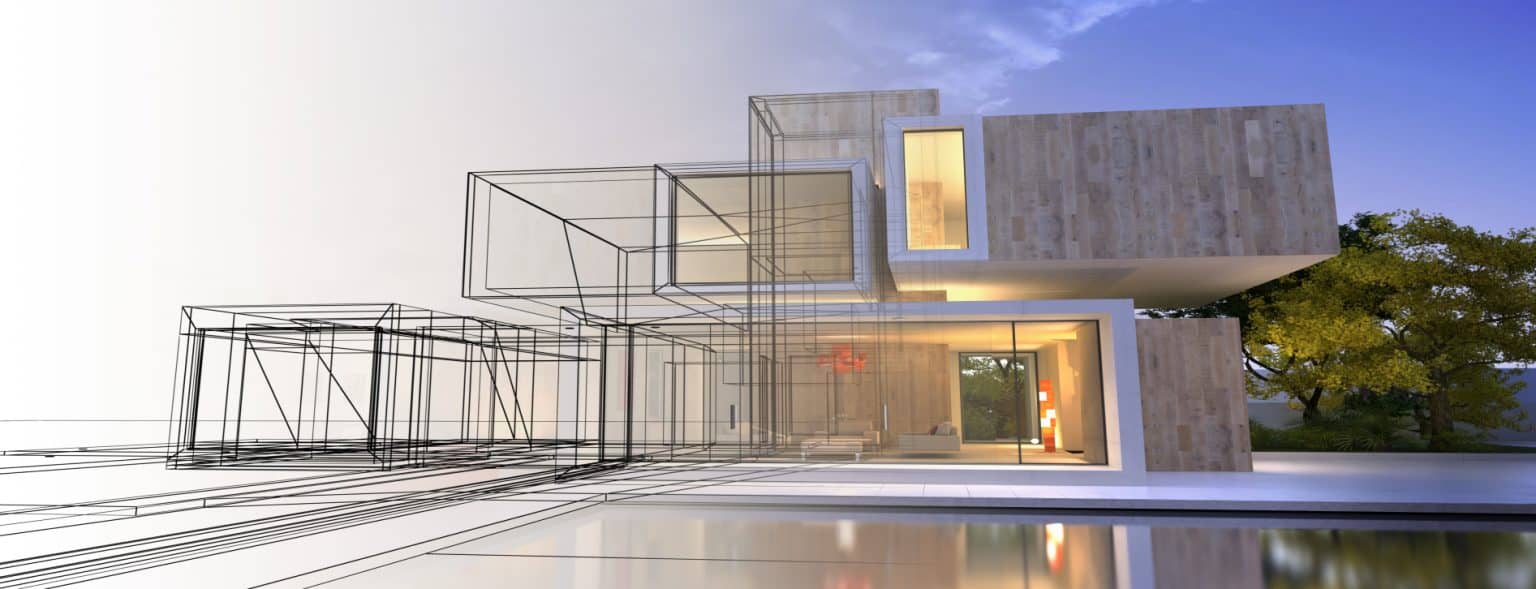
Advantages of BIM in Construction: 10 Key Benefits
Building Information Modeling (BIM) has become synonymous with technical progress and digital transformation in the construction industry. More and more companies are recognising the potential of BIM-supported projects.
This guide explores 10 key advantages of BIM in construction. Whether you’re new to BIM or looking to deepen your understanding, you’ll find practical insights into how BIM is reshaping the way we plan, build, and manage construction projects.
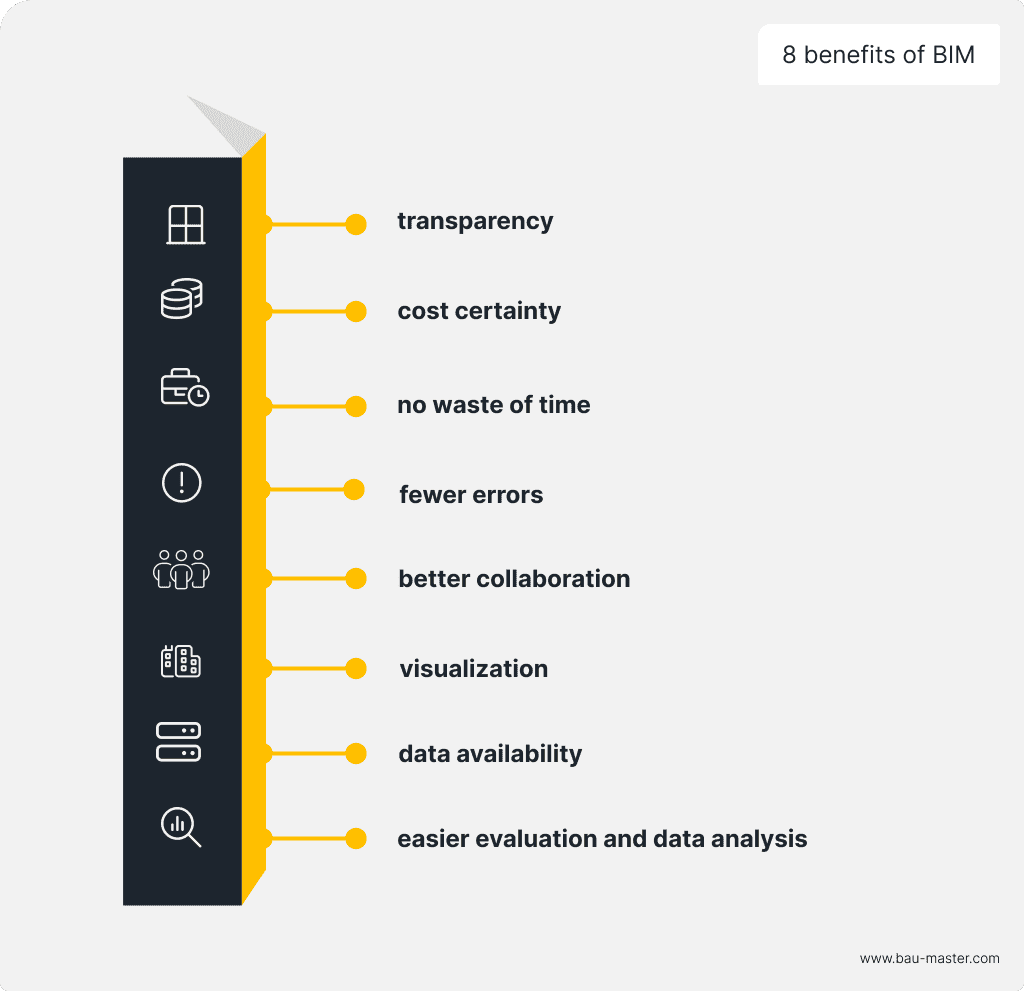
Benefits of BIM at a glance
1. Complete transparency – all stakeholders access the same information
2. Reliable cost control – accurate estimation and better planning
3. Shorter timelines – optimised workflows accelerate delivery
4. Drastically reduced errors – less rework and costly fixes
5. Enhanced collaboration – all teams work together on one shared model
6. Superior visualisation – see the finished building before construction
7. Centralised data – accessible anytime, anywhere
8. Powerful analysis options – test alternatives and simulate performance
9. Sustainability benefits – lifecycle analysis and optimisation
10. High return on investment – rapid payback despite initial costs
Want to use the advantages of BIM in your daily construction management? Find out how BauMaster can streamline your processes now!
What is BIM? A brief definition
BIM stands for Building Information Modeling. It refers to the digital, networked execution of a construction project. All data of a building is captured, linked, and managed in a 3D model throughout the entire lifecycle: from planning and construction to operation and maintenance.
Building Information Modeling connects not only information but also people: BIM brings architects, planners, construction companies, and all other stakeholders together on a central platform, promoting seamless collaboration. All collected data is available to project participants at all times.
BIM is technology and method combined
BIM describes both a technology – the BIM model as a digital twin of a real building – and a method – the collaborative process of bringing people, technologies, and workflows together in one central, digital location. Both aspects form a cohesive whole.
What BIM is not: a single software product. Instead, various manufacturers offer BIM-capable tools that display 3D models and enable central data management.
Discover the BIM features included in BauMaster
What is a BIM model?
The BIM model is the digital representation of a building – a 3D model populated with data throughout the entire construction project. This digital twin contains both geometric data (the building’s form) and alphanumeric data (properties, schedules, costs, materials, etc.).
Think of it as an advanced, interconnected database: all objects within the model are linked. When one parameter changes, it can automatically affect related parameters. This helps project teams identify and address dependencies early, preventing conflicts during construction.
Example: If the architect changes the floor plan at the client’s request, the windows may need to be repositioned. The window installer then receives notification that the number or position of windows has changed and can view the modifications directly in the model.
11 key advantages of BIM in construction
Below, we explore the key advantages that make BIM an increasingly essential tool for modern construction projects.
1. Complete transparency
BIM enables a fully transparent construction process where every stakeholder knows exactly who needs to do what and when. This open exchange strengthens collaboration and builds client trust. By making decision-making processes more visible, all affected parties can see the implications of changes immediately, leading to better outcomes.
2. Reliable cost control and budget security
Traditional projects often suffer from unexpected expenses and budget overruns. The BIM method helps estimate construction costs realistically and maintain budgets, as all decisions are supported by data-driven analysis:
Research demonstrates the financial impact: BIM reduces project costs by an average of 15%.
3. Significant time savings
BIM also accelerates project delivery – by an average of 20% according to the same case study. Architects and engineers can create, test, and visualise design alternatives digitally in real-time. Using well-founded data and simulations, work processes are optimised to minimise idle time and delays. Additionally, data only needs to be entered once, eliminating duplication of effort.
4. Drastically reduced errors and rework
Among the most significant advantages of BIM is its ability to prevent costly construction errors before they occur. The model immediately shows when clashes between trades are imminent or when parameters don’t align. Thanks to targeted communication and centralised data, less information is lost, and potential conflicts are identified before they become expensive problems.
5. Enhanced collaboration across all stakeholders
Whilst traditional CAD often meant working in isolation, BIM promotes integrated cooperation. The digital model serves as a common reference point where everyone can see how their work affects others. This collaborative approach avoids many unnecessary misunderstandings and disputes that typically occur in traditional projects.
6. Superior visualisation capabilities
One of the core advantages of using BIM is making planning visually verifiable: planning teams can identify design issues and test different approaches. 3D visualisation also transforms how stakeholders interact with designs. Clients can walk through virtual buildings before construction begins, providing feedback when changes are still easy and inexpensive to implement.
7. Centralised data availability
Another fundamental BIM benefit is having all project data in one place. A Common Data Environment (CDE) serves as the central hub where all participants can access the model simultaneously. Unlike traditional methods where information is scattered, the CDE provides a single, intelligently linked repository that is updated in real-time.
8. Powerful analysis and evaluation options
BIM transforms the planning process by enabling comprehensive analysis that would be impossible with traditional methods. Design teams can ask “What if?” questions and get immediate, data-driven answers:
These insights inform the decision-making process and lead to more refined designs.
9. Benefits for sustainable building and lifecycle management
Amongst the most valuable advantages of BIM in construction is its support for sustainable building practices. BIM allows teams to simulate energy and environmental scenarios early in the design process.
This extends through the entire lifecycle, facilitating whole-life cost analysis and making it clear how upfront investments pay back through reduced operating costs.
10. High return on investment
All the above advantages of using BIM translate directly into financial returns. Whilst implementing BIM requires initial investment in software, training, and process changes, the efficiency gains and cost savings typically deliver rapid payback and a competitive advantage.
BIM benefits throughout the building lifecycle
One of the strongest arguments for BIM is its versatility. Every stakeholder can leverage its advantages:
Architecture & planning
BIM means better planning with less effort for architects and engineers. From concept through to detailed design, fewer errors occur. Collision detection immediately flags parameter conflicts, while design alternatives can be easily evaluated based on concrete data regarding costs, construction time, and quality.
Construction site management
Building Information Modeling significantly eases the burden on site managers.
Construction execution
Construction firms leverage the advantages of BIM in their daily work as well:
Site safety
BIM also improves construction safety. Safety coordinators can derive relevant safety measures from the model and create tailored plans. Briefings benefit from visual support and critical safety information becomes immediately available to workers digitally.
As-built documentation
With BIM, construction documentation becomes nearly automatic. Since all data already exists digitally, it simply needs transferring into the appropriate format. This applies to everything from daily site reports to completion records.
All information remains accessible to facility management for maintenance, creating a seamless handover from construction to operations.
Starting with Digital Project Management
Implementing full Building Information Modeling can feel like a giant leap. A highly effective starting point is the digitisation of your construction project management: This approach allows you to professionalise your processes today while staying ready for the high-tech requirements of tomorrow.
BauMaster: the ideal BIM companion
Whilst BIM transforms how buildings are designed and constructed, effective project management remains essential to coordinate stakeholders, track progress, and maintain documentation. BauMaster integrates seamlessly into your digital workflows, providing the practical foundation to realise all the advantages of BIM in the field.
The future of construction is digital, collaborative, and data-driven. BauMaster helps you realise the benefits of BIM in your daily work, turning theory into practical results.
FAQ: advantages of BIM
What are the main advantages of BIM?
The key advantages of BIM include significant cost savings, reduced project timelines, drastically fewer errors, improved collaboration among all stakeholders, and complete transparency throughout the project.
What do you need to start with BIM?
Starting with BIM requires three key elements:
- appropriate software (BIM-capable tools that can create and edit 3D models),
- adequate hardware and infrastructure (including reliable internet for cloud-based collaboration),
- and trained personnel who understand both the technology and methodology.
What are BIM’s limitations?
BIM cannot function effectively without skilled coordination – a BIM manager or experienced project leader is essential to orchestrate collaboration between all participants. BIM also requires initial investment in software, training, and process changes, which can be challenging for smaller organisations. Additionally, BIM’s effectiveness depends entirely on data quality: incomplete or inaccurate information in the model undermines its benefits.